





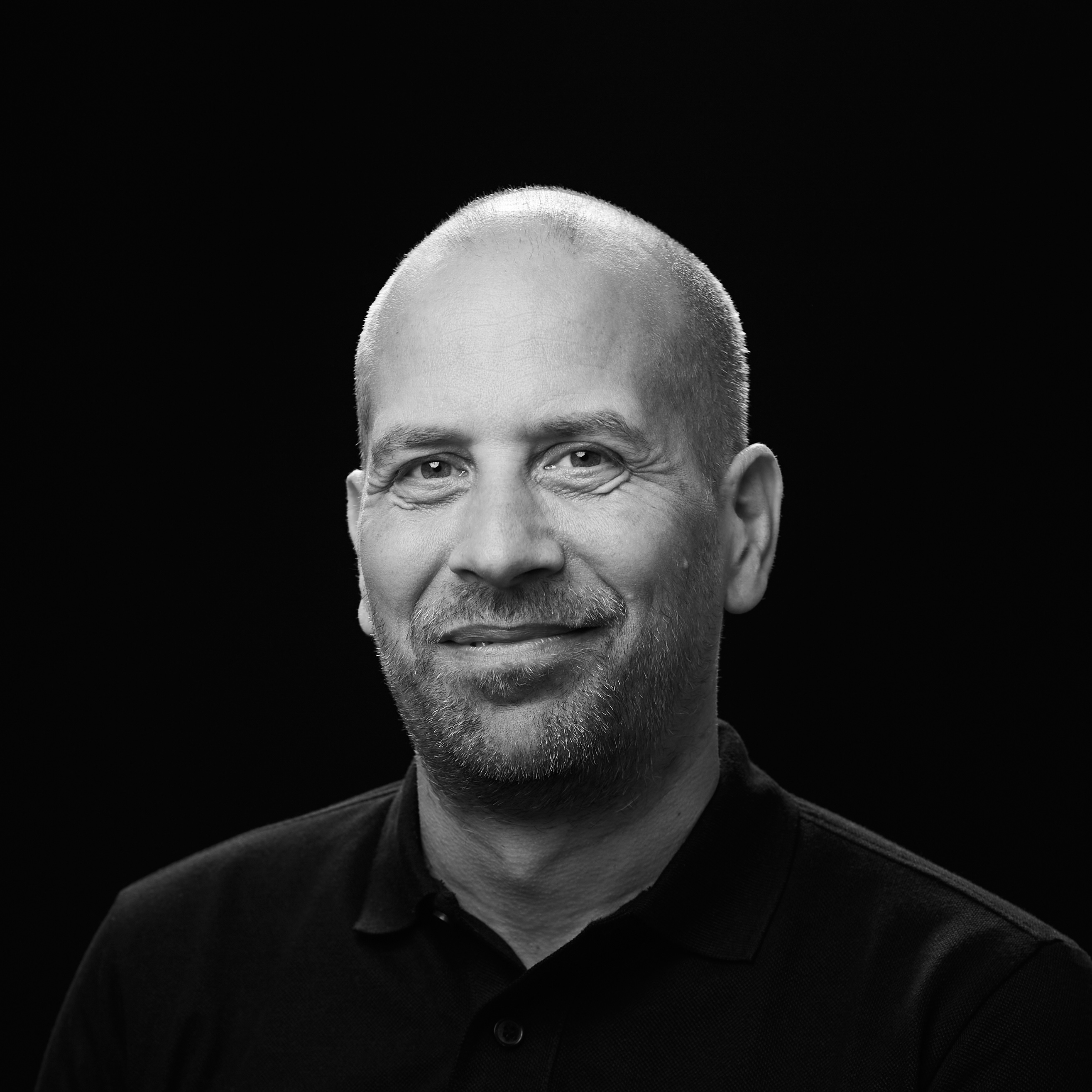
 My name is Hubert Klein Ikkink, but I am also known as mrhaki.
I am born in 1973 and live in Tilburg, The Netherlands, with my three gorgeous children.
My name is Hubert Klein Ikkink, but I am also known as mrhaki.
I am born in 1973 and live in Tilburg, The Netherlands, with my three gorgeous children.
I studied Information Systems and Management at the Tilburg University.
After finishing my study I started to work at a company specialized in knowledge based software.
There I started writing my first Java software (yes, an applet!) in 1996.
During the years my focus switched from applets, to servlets, to Java Enterprise Edition, to Spring based software.
At that same company I also was inspired by a colleague to write articles about Java (and Borland JBuilder) for magazines.
From that I was also invited to speak at the Borland conference and local meetups about Java.
In 2008 I wanted to have fun again when writing software.
The larger projects I was working on were more about writing configuration XML files, tuning performance and less about real development in my eyes.
So I started to look around and noticed Groovy as a very good language to learn about.
I could still use existing Java code and libraries and can use my Groovy classes in Java.
The learning curve isn’t steep and to support my learning phase I wrote down interesting Groovy facts in my blog with the title Groovy Goodness.
I post small articles with a lot of code samples to understand how to use Groovy.
And since November 2011 I am also a DZone Most Valuable Blogger (MVB), where DZone also posts my blog items on their site.
I have written three books about Gradle that are published by Packt Publishing. I also bundled a lot of my blog posts into books published at Leanpub. I also published several articles in Java Magazine which is a quarterly magazine published by the dutch Java user group NLJUG.
Checkout the Books page for more information.
In recent years I was invited to speak at Gr8Conf in Copenhagen, Denmark and at Gr8Conf US in Minneapolis, USA.
This is very good conference with all project leaders of Groovy and Groovy-related projects.
So it was a great honor to be invited and to speak at the conference about my Groovy, Grails and Gradle Goodness posts.
I also presented a talks about Gradle, Micronaut, Ratpack and Asciidoctor at the J-Fall conference of the Dutch Java User Group.
The conference is visited by 1000 Java developers and I got the chance to educate some of them about some nice Java frameworks and tools.
From 2016 I spoke about Asciidoctor, Spock and Micronaut at JavaLand in Germany.
A community driven Java conference at the Phantasialand amusement park.
Recently I was invited to speak at Devoxx Belgium about Asciidoctor.
I spoke also at several meetups and local meetings about various subjects like Groovy, Clojure, Gradle, Asciidoctor and much more.
Checkout the Talks page for more information and links to videos.
 I work at the great IT company JDriven.
Here I work on projects with Groovy & Grails, Gradle and Spring.
At JDriven we focus on agile, enterpris technologies.
All colleagues want to learn new technologies, support craftmanship and are very eager to learn.
This is truly a great environment to work in.
I work at the great IT company JDriven.
Here I work on projects with Groovy & Grails, Gradle and Spring.
At JDriven we focus on agile, enterpris technologies.
All colleagues want to learn new technologies, support craftmanship and are very eager to learn.
This is truly a great environment to work in.